

Turning up a thermostat feels simple, but behind that small action is a huge energy flow. Buildings account for about 40% of EU energy use and roughly half of EU gas consumption.
Europe’s targets
- 2030: at least 55% lower net greenhouse-gas emissions than in 1990;
- 2040: 90% lower net emissions;
- 2050: climate neutrality.
Why heating matters
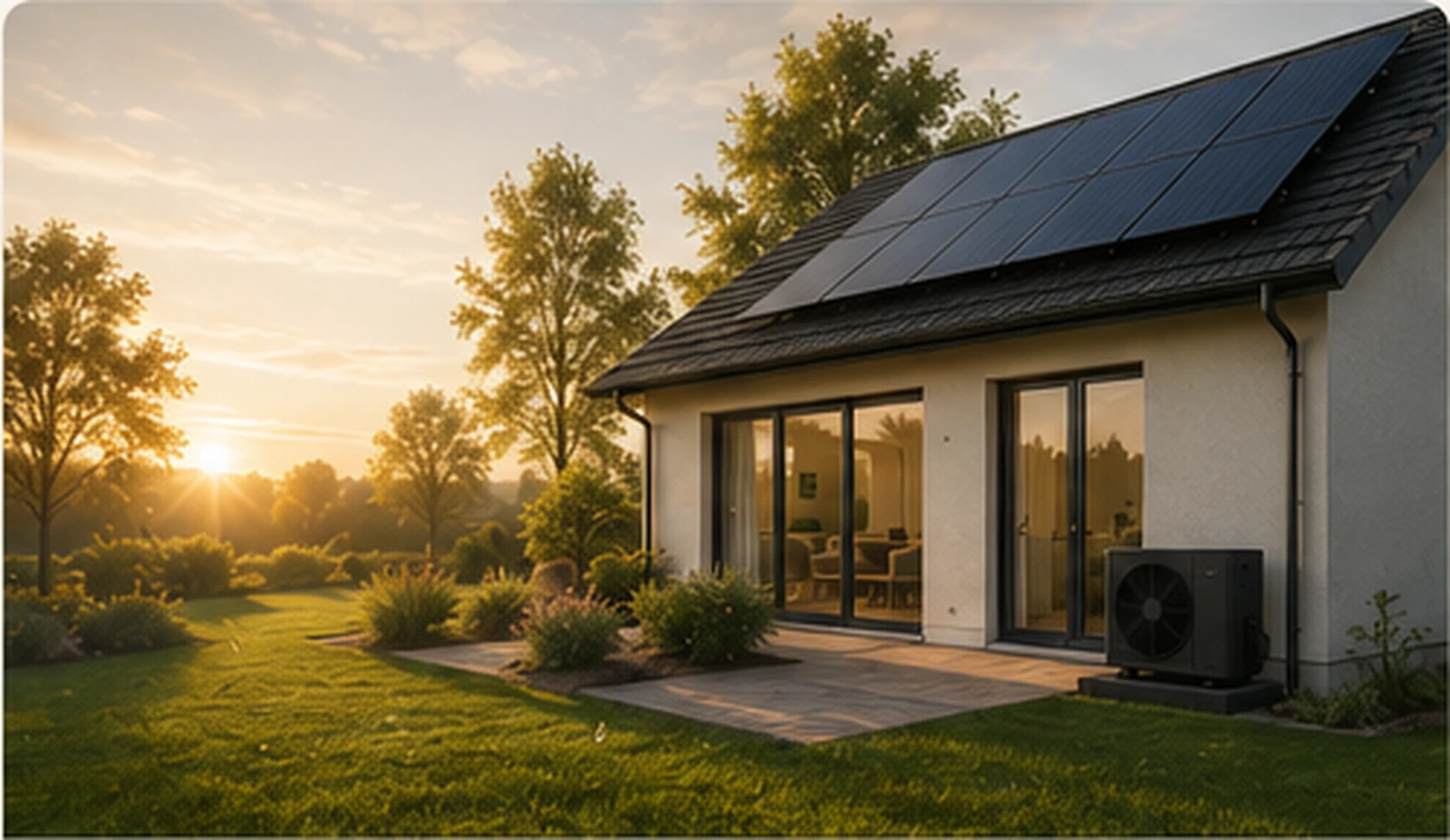
Even an efficient gas boiler still burns a fossil fuel. A heat pump uses electricity to move heat and can deliver several kWh of heat for each kWh of electricity used.
Electricity is not fully clean yet
True. But the electricity mix can improve over time. As more low-carbon generation is added, the same heat pump becomes cleaner without replacing the appliance in the home.
Reduce heat loss first
Insulation, glazing, airtightness and ventilation still matter. A home that loses less heat needs a smaller heat pump and can usually operate at lower water temperatures.
Design for low temperature
Even if a boiler remains for a few more years, new radiators, underfloor, wall or ceiling heating should ideally deliver enough heat at 35–45°C. That keeps future options open.
There is no single solution for everyone
District heating will be important in some dense areas, and collective systems will suit some buildings. For many individual homes, however, electric heat pumps are likely to play a major role.
Our view
The future is not one magic appliance. It is a combination of lower heat demand, low-temperature heat emitters, efficient heat pumps and an increasingly low-carbon electricity system.