

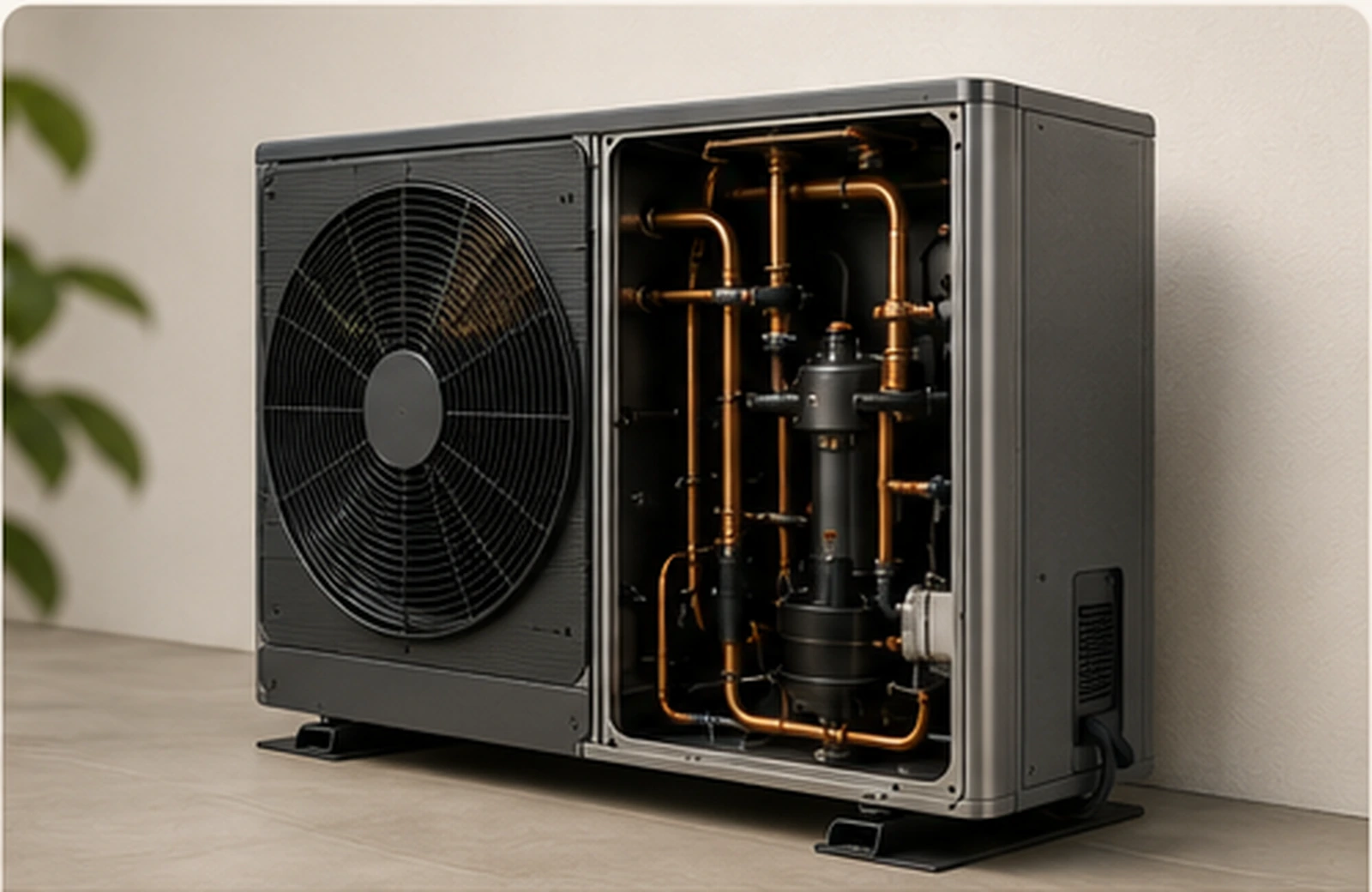
Almost every refrigerator, air conditioner and heat pump contains a refrigerant. It is essential to the refrigeration cycle that moves heat from a lower to a higher temperature.
What are F-gases?
Many traditional refrigerants are fluorinated greenhouse gases. Some have a high Global Warming Potential, or GWP. If they leak, a relatively small quantity can therefore have a significant climate effect.
EU Regulation 2024/573
For self-contained heat pumps up to 12 kW, including monoblocs, new equipment containing fluorinated gases with GWP 150 or above is in principle restricted from 1 January 2027, subject to safety exceptions.
From 1 January 2032, the rule goes further for this category and in principle excludes fluorinated greenhouse gases altogether, again with the safety exceptions set out in the regulation.
This does not suddenly make an existing heat pump illegal. These dates mainly concern the placing of new equipment on the market.
R290: propane as a refrigerant
R290 is refrigeration-grade propane. It has very low climate impact and favourable thermodynamic properties. Modern R290 heat pumps can also reach relatively high water temperatures.
Propane is flammable
That is true, and it has to be taken seriously. Manufacturers specify safety zones and siting requirements. Good equipment is designed around that property rather than pretending it does not exist.
Why monobloc architecture fits
In an air-to-water monobloc, the full refrigerant circuit stays inside the factory-built outdoor unit. The pipes entering the home mainly carry heating water.
For Space-heat, this is a logical architecture for R290: the refrigerant stays outdoors in the appliance designed specifically to contain it.
Why we choose it
- very low refrigerant climate impact;
- good alignment with the direction of EU regulation;
- no refrigerant pipework through the home in a standard monobloc installation;
- good efficiency and useful water temperatures for renovation.